Social media management: human expertise vs. automation

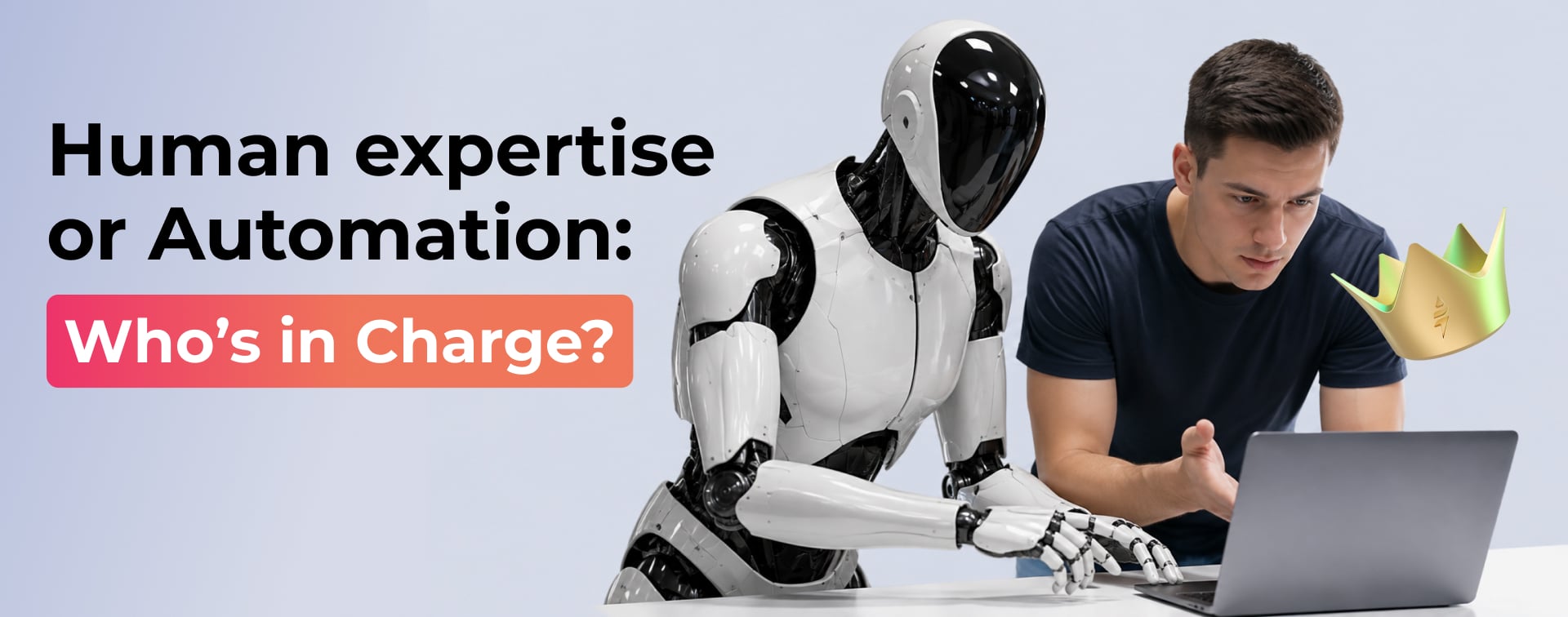
Every Instagram brand currently has all the available automation: from scheduling tools to auto-reply and DM sequence tools which allow running your account without any supervision. Instagram DM automation tools can schedule a week's worth of captions or send you automated Instagram messages the minute someone decides to follow you, and all that on paper may seem like having your own social media manager for the cost of a subscription fee. In reality, though, automation is just a part of the process, while the one who will know how and when to use the post, what kind of message it needs to be shared with, and how to interact with the person using Direct should remain.
This article will look at the points when IG DM automation works well, when only a professional manager would suffice, and how the two of them might complement each other. Compare an Instagram Post Scheduler against a plain calendar reminder. Search for how to automate Instagram direct messages without sounding like a robot.
Why automation isn't enough anymore
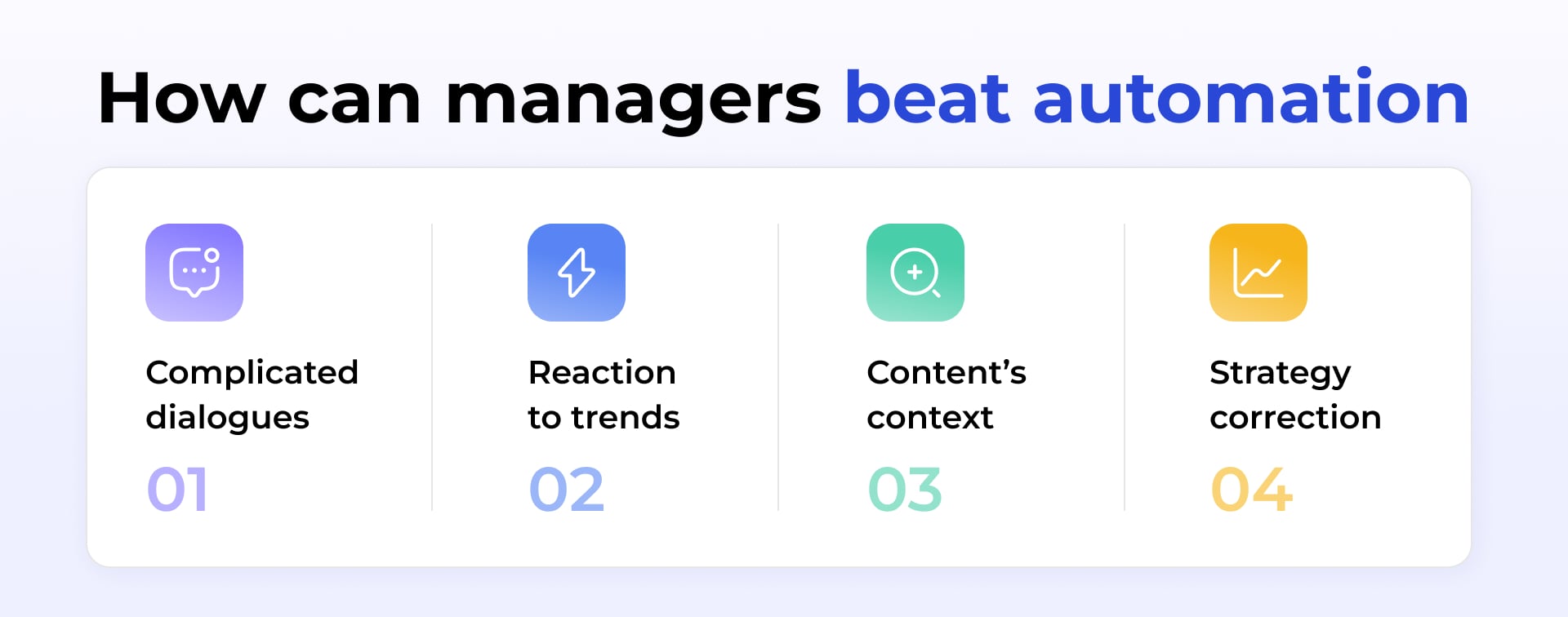
Automation is efficient in tasks which require repetitions. It fails miserably in tasks which involve judgment. The scheduler cannot realize that the rival company has suddenly become viral due to wrong reasons, that there has been a last-minute change in the national calendar of events or that the previously created carousel post was a flop and everything needs to be changed now. Social media platforms function according to their own plan where new formats emerge, algorithms change and news breaks all the time.
In addition, automated actions have no context. While the auto-reply might recognize the keyword in the DM, it cannot differentiate between a delivery question and a customer raging about a damaged package. Instagram Direct Messenger conversations are the site of many genuine customer connections being built or destroyed, and there is nothing more generic than a templated reply to a complaint.
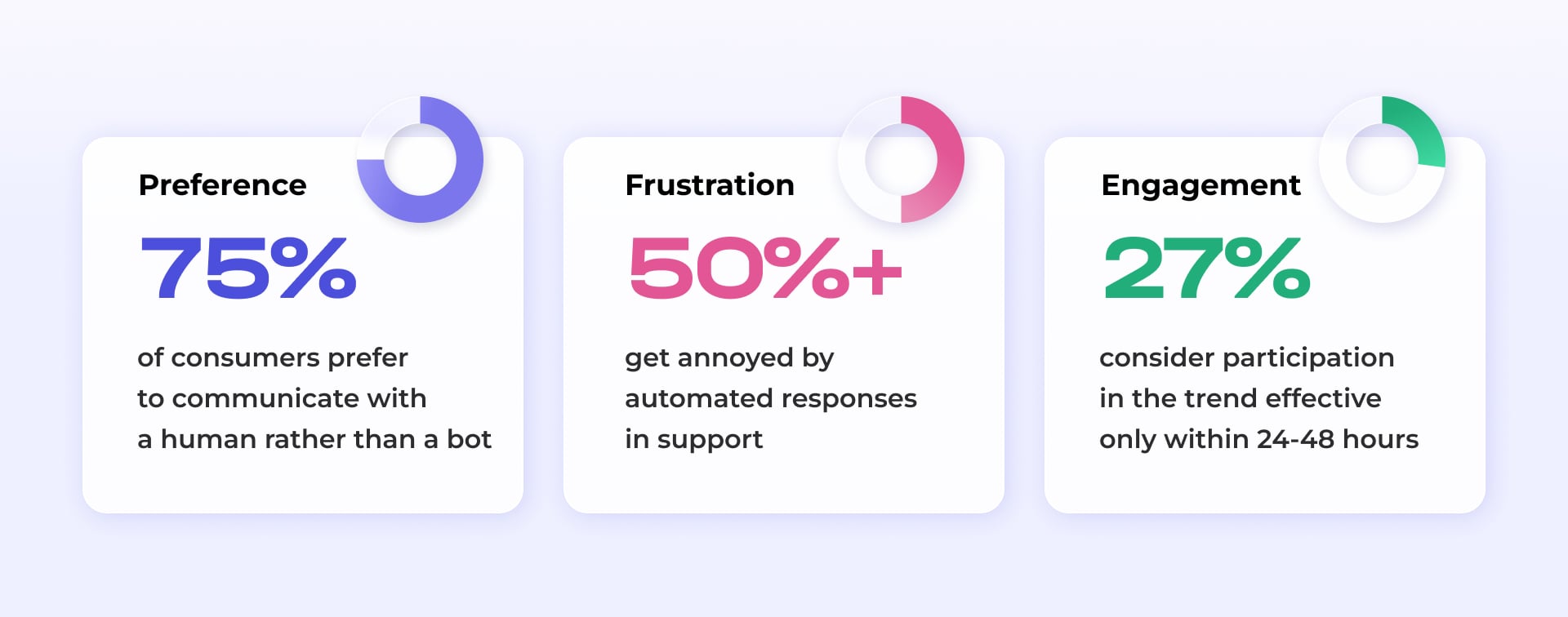
However, there is also an underlying trend at work here. Over the past couple of years, customers have been engaging with AI all over the place, whether through support chat, search engine results, or recommendations, and it is no longer new and exciting. This is confirmed by recent research: according to a Five9 study, 75% of consumers would rather talk to a person than to an AI algorithm, despite the prevalence of chatbots today. Additionally, the same research suggests that over half of the consumers feel irritated with the customer support bots powered by AI technology. And, of course, it is not the only time customers feel this way when interacting with the bot on their ticket, they will associate it with any automated response in DMs from the brand.
None of this suggests that we need to stop using automation completely. A scheduler for posting at 2 a.m. is still helpful. What needs to be questioned, however, are those platforms that claim to automate engagement for you. You can learn more about that in our piece on why Instagram bots are no longer effective. Briefly, people have learned to recognize bots, and getting caught using one will hurt you much more than any savings in time will help.
What a dedicated manager does that automation can't
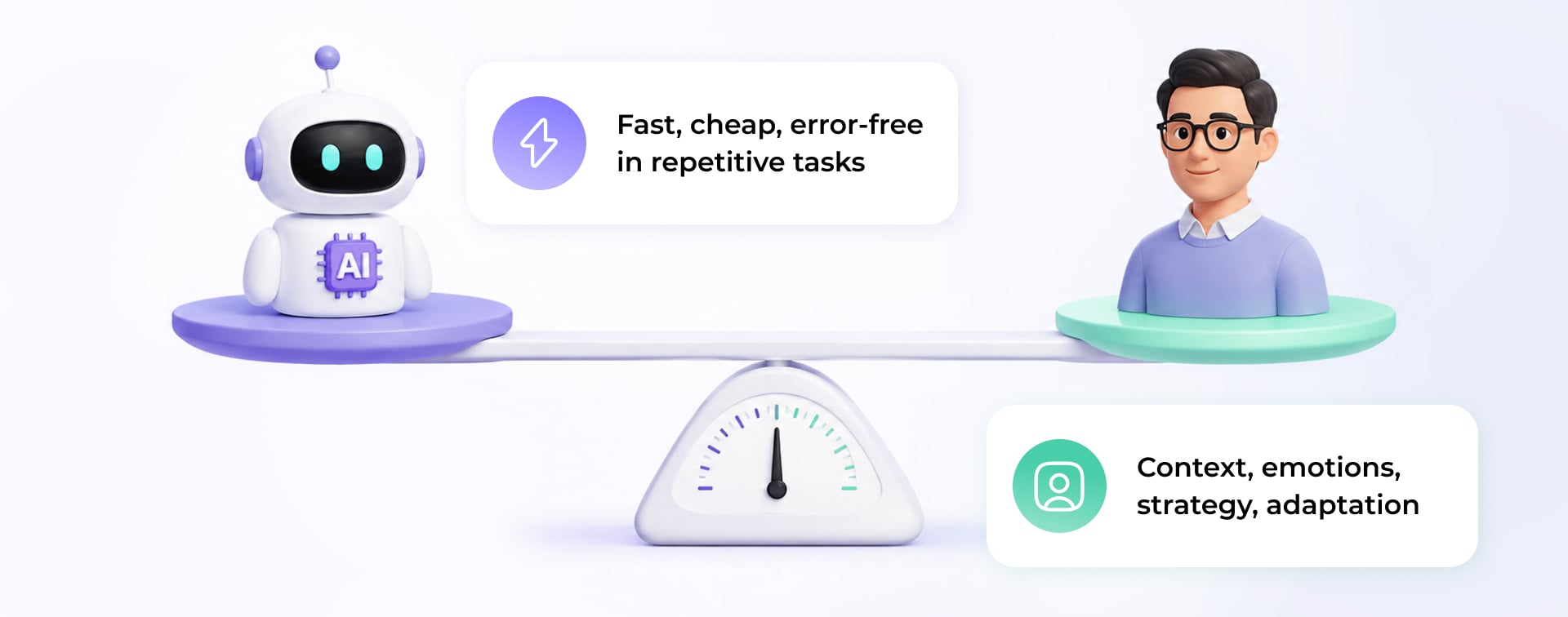
An Instagram scheduling tool is capable of publishing. There is a separate person responsible for determining which information will be published and when, as well as its place within the larger picture. This is how this distinction manifests itself in practice.
Creates content with real context
An automation tool creates a content calendar that merely follows the schedule that has been predetermined, publishing information according to a pre-set date and time. In contrast, a dedicated person plans and produces content, making sure that it serves the goals of the company such as the promotion of a product, seasonal marketing activity or adaptation to the latest developments in terms of the audience’s interests. Thus, captions, content type and even posting schedule depend on what worked last week rather than what should have happened according to the template.
The same principle applies to detecting a situation when the originally scheduled content does not fit anymore. Perhaps a competitor launched a similar product or campaign, perhaps the audience's interest has changed after some news appeared or a certain type of content (for example, static image posts) became less popular in comparison with reels and carousel posts.
Adjusts strategy in real time
The marketing plan will be done ahead of time, yet the internet isn't concerned about it. A manager in charge can cancel the scheduled posting seconds before it gets published if he/she feels that the timing isn't right, change the direction of an entire week's worth of postings based on the current event, or give the go ahead for a same-day posting that will take advantage of a new trend before it runs out. Based on the 2025 Index by Sprout Social, there is little leeway when brands need to act - 27% of consumers believe that participation in trends is effective only if it happens within 24 to 48 hours of its existence.
This is strategy as something that is alive, and not something set in stone. It needs someone who watches the account day-to-day, not software carrying out a plan written a month back.
Handles conversations personally
Every single DM, comment, and mention is an opportunity to sound more human or robotic. The designated manager reads the real message, gets the tone, and answers just like a human being - using auto-reply flows only for routine questions (opening hours, delivery information), and taking charge personally whenever the conversation becomes detailed, emotional or commercially valuable. Especially when it comes to Instagram DM automation, the Instagram DM marketing strategy works best when the first answer comes from a person who really reads the message, not from a keyword-triggered flow.
Some messages definitely need a personal answer instead of the template:
- Complaint about a product, order or experience;
- Question which includes more than one issue;
- Message with emotional, confused or urgent tone;
- Potential business contact or sale inquiry;
- Message from a follower who definitely tried the FAQ and didn’t find the answer.
Tools like Inflact's Instagram Scheduler tool help with the organization and tagging of the messages, but there are still two things to do: sorting and answering the message, and automation is available only for one of them.
Publishes when timing actually matters
A free Instagram Scheduler will be happy to schedule a post for 9 a.m. even though nothing is really going on in the world that particular day. The professional manager views scheduling as a matter of judgment, not a time slot, so they can hold off on posting if something newsworthy happens, move up a product launch if there is high engagement, or just drop an important update when it’s finished rather than wait around until the best time to post on Instagram. They analyze data regularly through the analytics tool for their audience engagement, campaign effectiveness, and reach, making changes in their scheduling accordingly.
Automation vs. a dedicated manager: side by side
It needs to be noted that automation and a dedicated person do not actually compete with each other for the same position. It can be seen from the following table:
|
Task |
Automation Tool |
Dedicated Manager |
|
Scheduling posts in advance |
Reliable, scheduled at the right time, efficient Instagram feed planner |
Schedule set up based on goals and events |
|
Answering standard DMs (FAQs, hours, links) |
Available 24/7, fast, handles volume |
Can answer, however, butt is more suitable for valuable conversations |
|
Answering tricky DMs |
Cannot see the context, may misinterpret the tone |
Understands the meaning, defuses situations, saves the relationship |
|
Reacting to current events/trends |
Doesn’t understand the relevance in real-time |
Adjusts the plan on the same day, often on the same hour |
|
Maintaining a consistent grid/layout |
Follows a predetermined Instagram grid planner layout |
Adapts the choice of layouts depending on content and goals |
|
Performance metrics tracking |
Gathers numbers |
Analyzes numbers and adjusts the strategy |
|
Monthly price |
Tends to be cheaper, subscription-based |
More expensive, although this depends on decisions made |
|
Expansion to multiple accounts |
Quite simple, does not require additional costs |
Harder, requires more time or personnel |
In reality, any good account will make use of both: Instagram feed planner or IG scheduler to manage the technical part of posting, and a person who will be responsible for deciding which content will be posted and managing everything that is not automated. If you are looking into different options, any review of the best Instagram schedulers will inform you about the same thing: Instagram layout planner is as effective as your strategy, and the planner for Instagram itself is just a tool for planning, but not for deciding.
Common scenarios where human management makes a difference
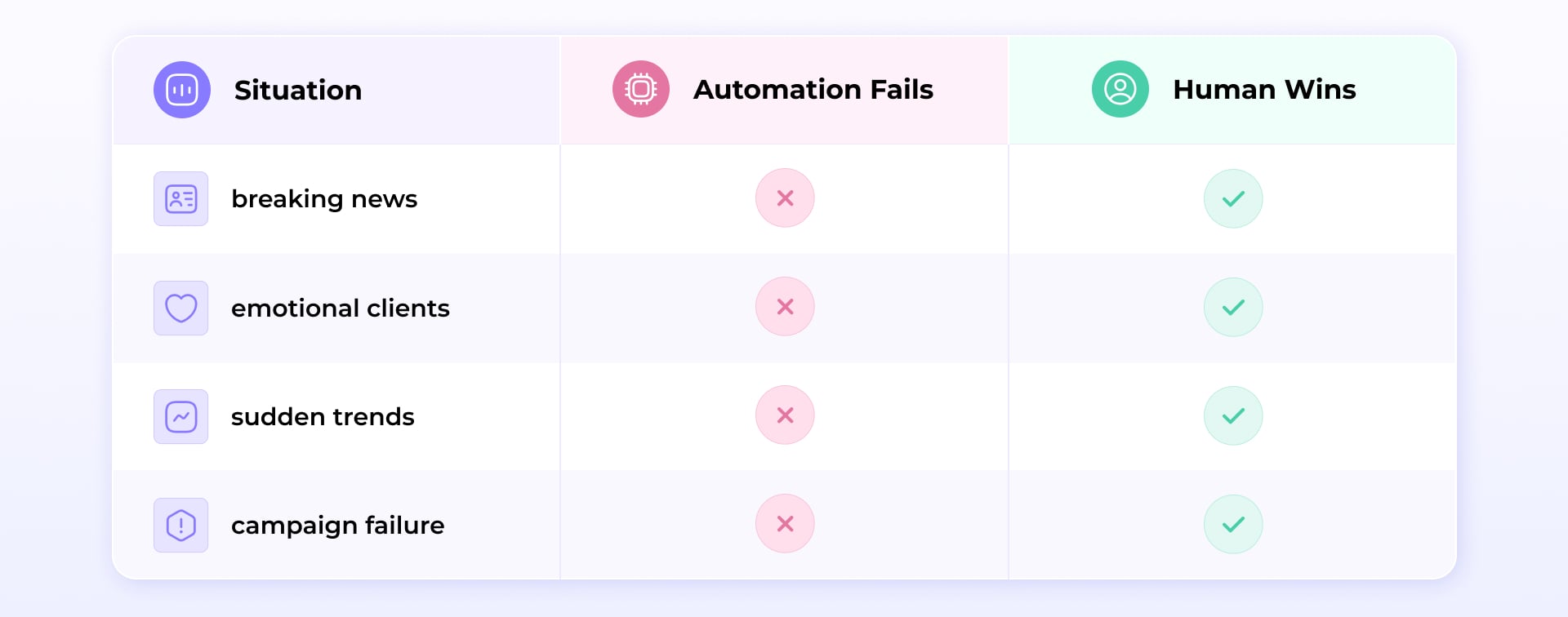
Automation is quite a failure, in the sense that it does not provide an error message but rather than a reply that is too late to be of use. Let us take a look at some examples of how this is apparent.
A breaking news event changes your content plan
There is a plan for a lighthearted content campaign set for the upcoming week and, out of nowhere, an important news item occurs. It may be a disaster or a tragic event or any other thing that does not fit with what was planned. The post is automatically published and thus looks out of place, because the automation tool doesn't read the news. A human manager following the news can easily stop it or postpone it for a day, and make all decisions in a matter of seconds.
A customer asks a complex question in DMs
Someone sends an inquiry which does not fall within the parameters of the set templates. Perhaps they have a question about a late delivery in addition to a billing matter, or they have a product-related query which requires details only they are aware of. Automated Instagram messages will detect certain keywords in the message, but cannot possibly handle the compounded matter. The bot either keeps the sender going in circles among unrelated options or gives them an auto-response that does not help at all in answering their question. The human reads the full message, follows up where necessary, and solves the problem.
Comments require a sensitive response
Commenting on a blog post highlights an actual problem concerning either the product, the practice, or something that the company mentioned somewhere else. The comment is visible to others; it affects the company’s reputation whether the company likes it or not. This is not the time for a canned response; the person handling this particular comment has to be able to read the situation, acknowledge the problem at hand, and then respond accordingly without causing more trouble. Automation does not have an awareness of what is at stake; to automation, there is no difference between an ethical complaint and a question about size.
A trend appears overnight
The next audio, format, or meme becomes big and then, during that small window of opportunity, those companies that capitalize on it gain an unusual reach. However, by the time a scheduled content check rolls around, the trend may well have run its course, according to Sprout Social, that window lasts for about a day or two. That's what a manager who works directly with trends will be able to do: recognize the trend, adjust it to their brand, and create something within the day. There is no way automation could react to that trend.
A campaign starts performing differently than expected
There is a running campaign where the numbers being generated do not meet the expectations: one post shows unexpectedly high engagement levels while another shows low, or one type of content performs better than the others. The scheduler will continue to auto publish the content according to the initial plan. Someone sees what’s really going on, questions why it happened and changes the next Instagram posts accordingly.
Why human-led social media creates better results
And none of this comes from automation being "bad". What we are talking about here is social media being social media, i.e., a place where a brand engages its actual customers in a public dialogue at the moment. Trust builds or crumbles within this dialogue, and there is no way for some software tool to build trust – there must be a person who makes decisions and who shows themselves when the situation requires.
Research data only support this point of view. According to Sprout Social research, authenticity and relatability are the two most important characteristics of a brand, preferred by consumers to polish and production value. Again, it is difficult to make automation do this, since it is not possible to set authenticity. This is something that results from the engagement of people in social activities on the account. An account manager does just that, bringing their personal judgment, a living voice to a brand, and noticing something that cannot be noticed from a dashboard - an unhappy customer, a growing trend, and changing plans.
This is the kind of gap that can be closed by the professional social media management services that Inflact provides. Rather than having your Instagram DM automation tool and IG feed planner services speculate about your tone or follow a set schedule, there is actually a human who oversees the strategies, content, and communications.
The bottom line: people still run great social media
Automation finds its rightful place in every social media process chain: why would anyone do it manually at 6 a.m., trying to catch the right time of posting? However, automation should aid the strategy-making process but not replace the person who makes it. The companies that get the most from Instagram now are those that use effective tools along with a living, breathing manager, who can sense the vibe, react, and treat each message the way it deserves. If you value having a professional manage your Instagram more than a list of posts to be made automatically, explore Inflact tools.
FAQ
How much access does a dedicated manager need to my account?
Not enough to let you sit back and relax but sufficient to monitor all actions: publishing, responding to DMs and comments and analyzing data. You are not giving up control of your account but rather seeing exactly what gets published, what responses were sent and what decisions were made the same way you'd know with any of your team members.
Is a dedicated manager available outside business hours?
Coverage works on a plan of when your audience is actually online, not 9-to-5 as engagement, trends and DMs do not end with the working day. Depending on your particular package, the schedule will differ.
How quickly does a dedicated manager respond compared to automation?
It is obvious that an automated Instagram messages tool will respond much faster on a stopwatch, since it has nothing to think about. What really matters is which responses qualify as prompt in the context of your customers' needs and questions. With a dedicated manager on hand, all the routine questions in DMs will be handled promptly using a templating approach if necessary, while the messages that require human interaction: complaints, difficult inquiries or sales leads, will receive individual attention, rather than being stuck in the back of the queue waiting for other things to be done first.
Isn't automation cheaper than a dedicated manager?
It certainly is cheaper on a subscription basis, but automation errors occur later and cause larger problems: inappropriate auto-reply at critical moments, overlooked direct messages that were in fact sales leads, or even getting restricted by Instagram because of automation-like behavior. In this way, automation may turn out to be more costly in the long run than hiring a dedicated manager.
-
Why automation isn't enough anymore
-
What a dedicated manager does that automation can't
-
Creates content with real context
-
Adjusts strategy in real time
-
Handles conversations personally
-
Publishes when timing actually matters
-
Automation vs. a dedicated manager: side by side
-
Common scenarios where human management makes a difference
-
A breaking news event changes your content plan
-
A customer asks a complex question in DMs
-
Comments require a sensitive response
-
A trend appears overnight
-
A campaign starts performing differently than expected
-
Why human-led social media creates better results
-
The bottom line: people still run great social media
-
FAQ
-
How much access does a dedicated manager need to my account?
-
Is a dedicated manager available outside business hours?
-
How quickly does a dedicated manager respond compared to automation?
-
Isn't automation cheaper than a dedicated manager?
Related Articles
Significant benefits